SodaSlim Official Website › Blog › Raspberry Ketone, In Mice Only
Raspberry Ketone Has Been Measured Only In Mice
Four published papers, four rodent studies and no randomised trial in a person. Here is what the animal work actually found, and why this desk declines to translate any of it.
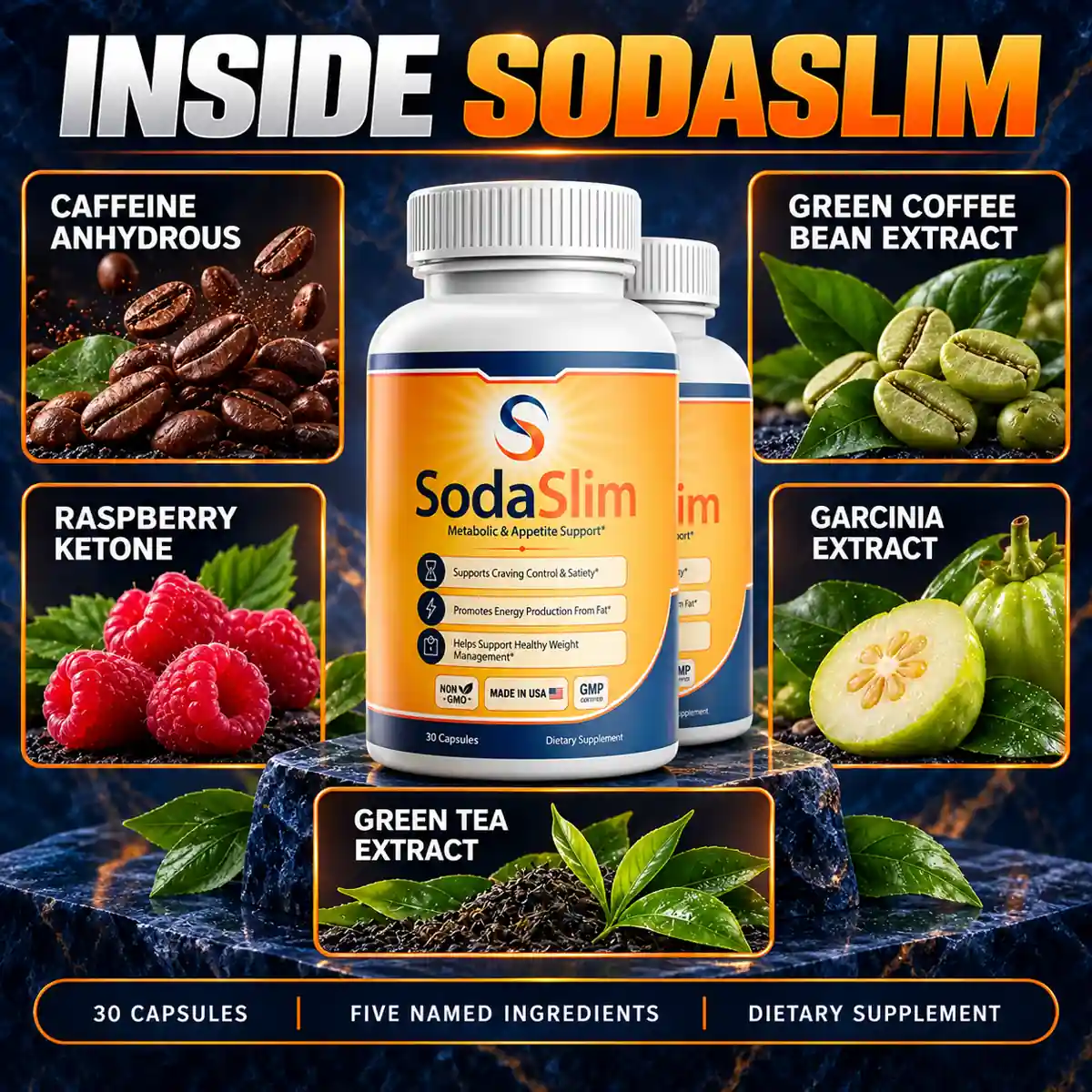
- Raspberry ketone is a single aroma compound, the one that makes ripe raspberries smell as they do.
- There is no randomised controlled trial of the isolated compound in people.
- The published work is in mice, at 165 to 500 mg per kilogram of body weight.
- In the ten-day study, the two higher doses were associated with substantial mortality among the animals.
- This website reports the animal work as animal work, names the species, and stops there.
What raspberry ketone is
Chemically it is 4-(4-hydroxyphenyl)butan-2-one, a single small molecule and the principal aroma compound of raspberries. It is what a ripe raspberry smells like, and it has been used as a flavouring for a very long time.
At supplement doses it is produced industrially rather than extracted. The quantity present in actual raspberries is tiny, and getting a capsule's worth out of fruit would require a quantity of raspberries nobody would seriously propose.
That is worth knowing because the ingredient's appeal is partly the word. A panel that reads raspberry ketone suggests fruit, and the substance in a capsule is a manufactured aroma compound. Neither fact is damning; the gap between the impression and the reality is simply larger here than with most plant extracts.
What the four papers found
The published literature on this compound is small and entirely preclinical. Four papers carry most of it.
| Study | Species | What it found |
|---|---|---|
| The ten-day dosing study | Mice, normal and obese | Slowed weight gain at 165, 330 and 500 mg per kilogram, with substantial mortality at the two higher doses |
| The meal-pattern study | Mice | Altered meal patterns and cardiovascular parameters rather than direct action on fat |
| The bioavailability study | Mice | How much of an oral dose survives digestion, and how diet-induced obesity changes it |
| The hypothalamic study | Mice on a high fat diet | An effect on hypothalamic inflammation |
Four papers, four rodent studies. There is no randomised controlled trial of the isolated compound in people.
The ten-day study is the one most worth reading carefully. It gave mice 165, 330 and 500 mg per kilogram of body weight across normal, obese and health-compromised obese groups, and reported that the compound retarded weight gain compared with controls in a preliminary study. It also reported mortality of 67.6 per cent and 50 per cent at the two higher doses in the obese animals, and 70 per cent in the health-compromised group at the highest dose.
That second finding is absent from almost every summary of this ingredient, and it is the reason a page describing the research has an obligation to quote the numbers rather than the conclusion.
The meal-pattern study is the most mechanistically interesting. It found the compound altered how and when mice ate, and changed cardiovascular parameters, rather than acting on fat stores directly in a controlled feeding study. If that transferred to people, it would make raspberry ketone an appetite compound rather than a fat compound, which is a different product entirely.
A bioavailability study measured how much of an oral dose survives digestion and reaches circulation, and found diet-induced obesity changed the answer in mice. A 2024 paper described an effect on hypothalamic inflammation in mice on a high fat diet in obese animals.
Why the doses do not scale
A reader encountering 330 mg per kilogram might reasonably try to convert it. The conversion is the point at which this ingredient's problem becomes obvious.
A seventy-kilogram person at 330 mg per kilogram would be taking 23 grams a day. That is not a capsule; it is a substantial fraction of a cup of powder, and no supplement in this category contains anything remotely approaching it.
Interspecies dose conversion is not a straight multiplication, and the accepted adjustments would bring that figure down considerably. They would not bring it into the range a multi-ingredient capsule could carry. The honest reading is that the amounts at which anything was observed in mice are not amounts a person takes.
The mouse mortality occurred at doses far above anything scaled to a human capsule, and no human safety signal for raspberry ketone has been reported. The argument is narrower: the doses that produced effects in animals are not the doses in a capsule, so the animal findings cannot be used to predict what a capsule does.
Order SodaSlim knowing which plants carry the evidence
Randomised human trials at stated doses stand behind two of the five plants on this panel. Behind one of them there is nothing, and every page here that names it says so.
From $49 a bottle on six, $79 on two · 60 days to send it back
Go To The SodaSlim CheckoutThirty capsules · one each morning · batch SOD-26/SO-8573
What cannot be concluded
| Question a buyer would ask | Answer available from the research |
|---|---|
| How much should a person take? | Unknown. No human dose has been established |
| How long before anything happens? | Unknown. No human timescale has been measured |
| What would it do? | In mice, it changed eating patterns. Whether it does so in people has not been tested |
| Is it safe at supplement doses? | No human safety trial exists. The mouse mortality was at doses far above anything scaled to a capsule |
| Why is it in so many formulas? | It became popular through media attention rather than through a human trial |
Five questions, five honest answers, four of which are that nobody knows. That is the position, and dressing it up would be the only dishonest thing this page could do.
Four of those five answers are that nobody knows, and there is no way to improve them without a trial that has not been run. A website that filled those cells with confident sentences would be inventing them.
This is what the refusal recorded in this desk's own source file amounts to: no page here states that raspberry ketone does anything measurable in a person, because no evidence supports the statement. The ingredient pages report what the animal work found, name the species, and stop.
Why it is on the panel at all
Honestly, because it became popular. Raspberry ketone had a period of intense media attention in the early 2010s, of the same kind and in roughly the same years as green coffee bean extract, and the two often appear on the same bottles for that reason.
Popularity is not evidence, and it is not fraud either. An ingredient that consumers recognise sells a formula, and a manufacturer including one is responding to a market rather than making a claim. The claim would be the sentence on the label saying it works, and this label does not carry such a sentence about any individual ingredient.
The four printed statements on this bottle are about the formula as a whole. That is a defensible way to label a product, and it means the presence of an unproven ingredient is not in itself a claim about it.
What a human trial would have to look like
It is a fair question, and answering it makes the size of the gap concrete rather than rhetorical.
A useful trial would need a dose a person could plausibly take, which immediately rules out anything scaled from the rodent figures. It would need a placebo arm, because appetite and eating behaviour are among the most placebo-responsive outcomes in medicine. It would need to run long enough for a weight measurement to mean something, which in this category means eight weeks at minimum and preferably twelve.
And it would need to test the compound alone. Almost every commercial product containing raspberry ketone also contains caffeine, which is an ingredient with genuine effects on appetite and energy expenditure. A trial of a combined formula that found something would not tell anybody which ingredient produced it.
None of that is exotic. It is the ordinary design of the trials cited elsewhere on this website for the other plants on this panel. The absence of such a study after more than a decade of commercial popularity is itself informative, and what it informs is the strength of the commercial incentive to run one, which appears to be low.
How to weigh an unproven ingredient
- Treat it as unproven rather than as disproven. An absence of human trials is not a negative result; it is an absence.
- Weigh the rest of the formula on its own merits, since the plants with randomised evidence do not become weaker because a neighbour lacks it.
- Be suspicious of any marketing that describes animal findings in human language, which is the specific move this desk refuses to make.
- Remember that a fixed capsule volume is shared. An ingredient present for recognition is taking space from one present for effect.
- Check what a public body says. The NIH Office of Dietary Supplements keeps a plain summary of the weight-loss ingredient literature for consumers, with nothing to sell.
Four mouse papers, no human trial, and doses that do not scale to a capsule. Raspberry ketone is reported here as animal research, with the species named, and nothing is inferred from it about people.
References
- Mir TM, Ma G, Ali Z, Khan IA, Ashfaq MK. Effect of raspberry ketone on normal, obese and health-compromised obese mice: a preliminary study. J Diet Suppl. 2021;18(1):1-16. PMID 31603036. https://pubmed.ncbi.nlm.nih.gov/31603036/
- Kshatriya D, Hao L, Li X, et al. Raspberry ketone [4-(4-hydroxyphenyl)-2-butanone] differentially effects meal patterns and cardiovascular parameters in mice. Nutrients. 2020;12(6):1754. PMID 32545402. https://pubmed.ncbi.nlm.nih.gov/32545402/
- Zhao D, Yuan B, Kshatriya D, et al. Influence of diet-induced obesity on the bioavailability and metabolism of raspberry ketone (4-(4-hydroxyphenyl)-2-butanone) in mice. Mol Nutr Food Res. 2020;64(8):e1900907. PMID 32052560. https://pubmed.ncbi.nlm.nih.gov/32052560/
- Yao Z, Zhu Z, Chen X, et al. Ameliorative effect of raspberry ketone on hypothalamic inflammation in high fat diet-induced obese mice. J Nutr Sci Vitaminol (Tokyo). 2024;70(6):496-502. PMID 39756970. https://pubmed.ncbi.nlm.nih.gov/39756970/
- Dietary Supplements for Weight Loss: Fact Sheet for Consumers. National Institutes of Health, Office of Dietary Supplements. https://ods.od.nih.gov/factsheets/WeightLoss-Consumer/