SodaSlim Official Website › Blog › The Green Coffee Retraction
The Green Coffee Study That Was Retracted, And What Replaced It
One trial made green coffee bean extract famous, and it no longer stands. The ingredient is still on this front panel, and the evidence behind it today is smaller, slower and considerably more trustworthy.
- A 2012 crossover reported large losses on green coffee extract and was later retracted. The PubMed record carries that label today.
- Pooled trials since find a mean difference of about 1.3 kg against placebo at 500 mg a day of chlorogenic acid.
- A dose-response analysis found nothing at all below four weeks.
- The ingredient is real and the effect is modest. Neither of those two sentences was what the 2012 headlines said.
- This desk cites the retracted paper on purpose, labelled as retracted, because the claim it produced is still circulating.
What people remember about green coffee
Somewhere around 2012, green coffee bean extract became briefly unavoidable. It was on daytime television, in supplement aisles and on the front of a great many bottles that had contained something else the previous year. The numbers attached to it were large and the timescale was short.
What persists from that period is a vague and confident impression: that green coffee does something dramatic. Impressions of that kind are durable precisely because they are vague. Nobody remembers the study design, the dose or the duration, so there is nothing specific to revise.
| Claim in circulation | What the current evidence supports |
|---|---|
| Green coffee extract produces large, rapid weight loss | Pooled trials at 500 mg a day of chlorogenic acid find a mean difference of about 1.3 kg against placebo |
| It works without changes to diet | The trials measured it alongside controlled eating; the eight-week trial combined 400 mg a day with energy restriction |
| Results appear within days | A dose-response analysis found periods shorter than four weeks produced no measurable effect |
| The famous study proved it | That study was retracted, and the PubMed record carries the label today |
The left column is what survived in public memory. The right column is what the literature currently supports, which is smaller, slower and still real.
The right-hand column of that table is the honest position, and none of it is as exciting as what the left column claimed. It is also, unlike the left column, supported by pooled randomised evidence.
The trial, and its withdrawal
The study at the centre of the boom was a randomised, double-blind, placebo-controlled linear-dose crossover in overweight subjects, published in 2012 and reporting substantial reductions on green coffee extract in a journal record that today carries the label retracted publication.
It was retracted. The PubMed record for it is categorised as a retracted publication, and that categorisation is returned by the database itself rather than being an editorial characterisation added here.
This website cites it anyway, with the label attached, and the reason is worth stating. A reader who half-remembers the green coffee story is carrying a claim with no ending. Omitting the paper leaves that claim standing and unanswered; citing it and saying what happened is the only version of this section that actually informs anybody.
It removes a paper from the body of evidence. It does not automatically invalidate the ingredient, the mechanism or the other trials, which stand or fall on their own. The correct response is to read what is left rather than to discard the field.
What replaced it
A decade of more careful work, most of it smaller in its claims and larger in its samples.
| Study | Design | What it reported |
|---|---|---|
| The 2023 meta-analysis | Pooled randomised trials using at least 500 mg a day of chlorogenic acid | A mean reduction of about 1.3 kg in body weight, with no heterogeneity between studies and no detectable publication bias |
| The dose-response analysis | Fifteen randomised trials of green coffee extract in adults | Effects on anthropometric measures, with nothing at all below four weeks of supplementation |
| The eight-week trial | 64 obese women, 400 mg a day of extract plus energy restriction | Changes in serum adipocytokines and body composition |
| The 2012 crossover | A linear-dose crossover in overweight subjects | Large reductions, and a subsequent retraction |
The three trials above the line are the current evidence base. The fourth is the one most people remember.
The 2023 meta-analysis is the most useful of these for a buyer. It pooled randomised trials using at least 500 mg a day of chlorogenic acid and reported a mean reduction of about 1.3 kg in body weight against placebo, with no heterogeneity between studies and no publication bias detectable by the usual tests in a systematic review.
A figure of 1.3 kg is not a headline. It is, however, a figure that survived pooling, which is more than most supplement ingredients manage, and the absence of heterogeneity means the individual trials were pointing the same way rather than cancelling each other out.
A broader review of chlorogenic acid across the coffee literature covers the compound's wider effects in a comprehensive review, and a 2017 randomised trial gave 64 obese women 400 mg a day for eight weeks alongside energy restriction measuring serum adipocytokines and body composition.
Order SodaSlim with the green coffee evidence read properly
Green coffee bean extract is one of five plants on this front panel, and the current evidence for it is modest, replicated and slow. That is a better basis for a purchase than a headline from 2012.
From $49 a bottle on six, $79 on two · 60 days to send it back
Go To The SodaSlim CheckoutThirty capsules · one each morning · batch SOD-26/SO-8573
The four-week floor
The single most practical finding in this literature has nothing to do with the retraction. A dose-response meta-analysis across fifteen randomised trials reported that supplementation periods shorter than four weeks produced no effect at all on any anthropometric measure.
That is a hard floor and it explains a great deal about how people experience this category. A buyer who takes a green coffee formula for ten days and concludes it does nothing has conducted a valid experiment and reached the answer the literature predicted. They have not, however, tested the ingredient.
It also explains why a return window matters more here than the terms themselves suggest. A thirty-day window forces a decision at roughly the point the evidence says to start looking. A sixty-day window lets somebody reach four weeks, form a view, and still send it back.
What that means for this bottle
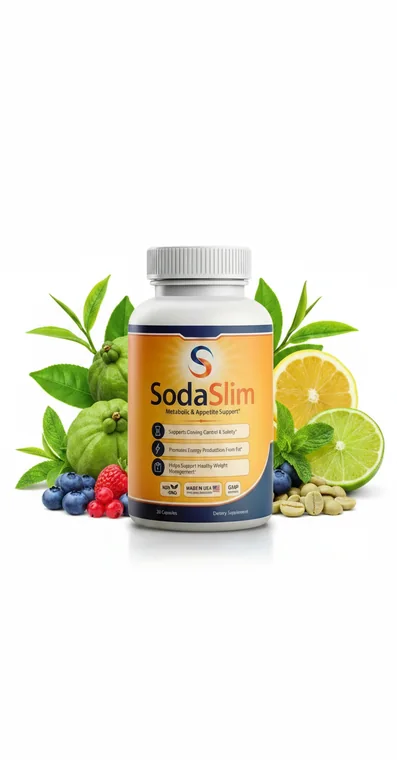
Green coffee bean extract is one of five plants named on this front panel, and the panel gives no amount for it. The pooled trials are dosed against chlorogenic acid content, not against extract weight, so even a printed extract figure would leave a further question about standardisation.
What a reader can take from this piece is therefore not a conclusion about the capsule. It is a conclusion about the ingredient: it is real, the effect is about 1.3 kg in pooled trials at 500 mg a day of chlorogenic acid, it needs four weeks minimum, and the famous study everybody remembers is not part of the evidence any more.
Whether this particular capsule reaches anything like that dose is a question the artwork cannot answer, and no page on this website pretends otherwise.
How a headline becomes an ingredient
The sequence is worth naming, because it repeats. A single trial reports a striking result. A broadcast or a magazine picks it up, because a striking result is the only kind that makes a story. Manufacturers respond to the demand that follows, and within a year the ingredient is on hundreds of labels.
Nothing in that chain requires anybody to lie. The trial was published, the coverage reported it accurately enough, and a manufacturer adding a popular ingredient is answering a market rather than making a claim. The weakness is structural: the whole edifice rests on one study, and one study is the least reliable unit of evidence there is.
What follows the boom is slower and quieter. Other groups attempt replication, most of them find smaller effects, and eventually somebody pools the lot and publishes a figure nobody reports. By then the ingredient is established and the original number is what people remember.
Green coffee ran that course with an unusually clean ending, because the founding trial was withdrawn outright rather than merely failing to replicate. Most ingredients in this category do not get such a clear correction, which makes this one worth studying.
The transferable lesson
Retractions are rare and the ingredients attached to them are not thereby worthless. What the green coffee episode teaches is narrower and more useful: a single striking trial is the weakest form of evidence that gets treated as the strongest, because it is the one that makes the news.
Pooled analyses of many trials are duller, later and far more reliable, and they almost always report smaller effects than the trial that started the excitement. That pattern repeats across this entire category, and a reader who expects it will be disappointed less often and misled less often.
Applied to any supplement, the rule is: ask what the meta-analysis says, not what the study said.
The trial that made green coffee famous was withdrawn. What replaced it is a modest, replicated effect of about 1.3 kg at 500 mg a day of chlorogenic acid, with nothing at all below four weeks.
References
- Vinson JA, Burnham BR, Nagendran MV. Randomized, double-blind, placebo-controlled, linear dose, crossover study to evaluate the efficacy and safety of a green coffee bean extract in overweight subjects. Diabetes Metab Syndr Obes. 2012;5:21-7. RETRACTED PUBLICATION. PMID 22291473. https://pubmed.ncbi.nlm.nih.gov/22291473/
- Kanchanasurakit S, Saokaew S, Phisalprapa P, Duangjai A. Chlorogenic acid in green bean coffee on body weight: a systematic review and meta-analysis of randomized controlled trials. Syst Rev. 2023;12(1):163. PMID 37710316. https://pubmed.ncbi.nlm.nih.gov/37710316/
- Gorji Z, Varkaneh HK, Talaei S, et al. The effect of green-coffee extract supplementation on obesity: a systematic review and dose-response meta-analysis of randomized controlled trials. Phytomedicine. 2019;63:153018. PMID 31398662. https://pubmed.ncbi.nlm.nih.gov/31398662/
- Haidari F, Samadi M, Mohammadshahi M, et al. Energy restriction combined with green coffee bean extract affects serum adipocytokines and the body composition in obese women. Asia Pac J Clin Nutr. 2017;26(6):1048-1054. PMID 28917230. https://pubmed.ncbi.nlm.nih.gov/28917230/
- Tajik N, Tajik M, Mack I, Enck P. The potential effects of chlorogenic acid, the main phenolic components in coffee, on health: a comprehensive review of the literature. Eur J Nutr. 2017;56(7):2215-2244. PMID 28391515. https://pubmed.ncbi.nlm.nih.gov/28391515/